Why Does Wildfire Smoke Season Increase the Need for Professional Office Cleaning in Billings?
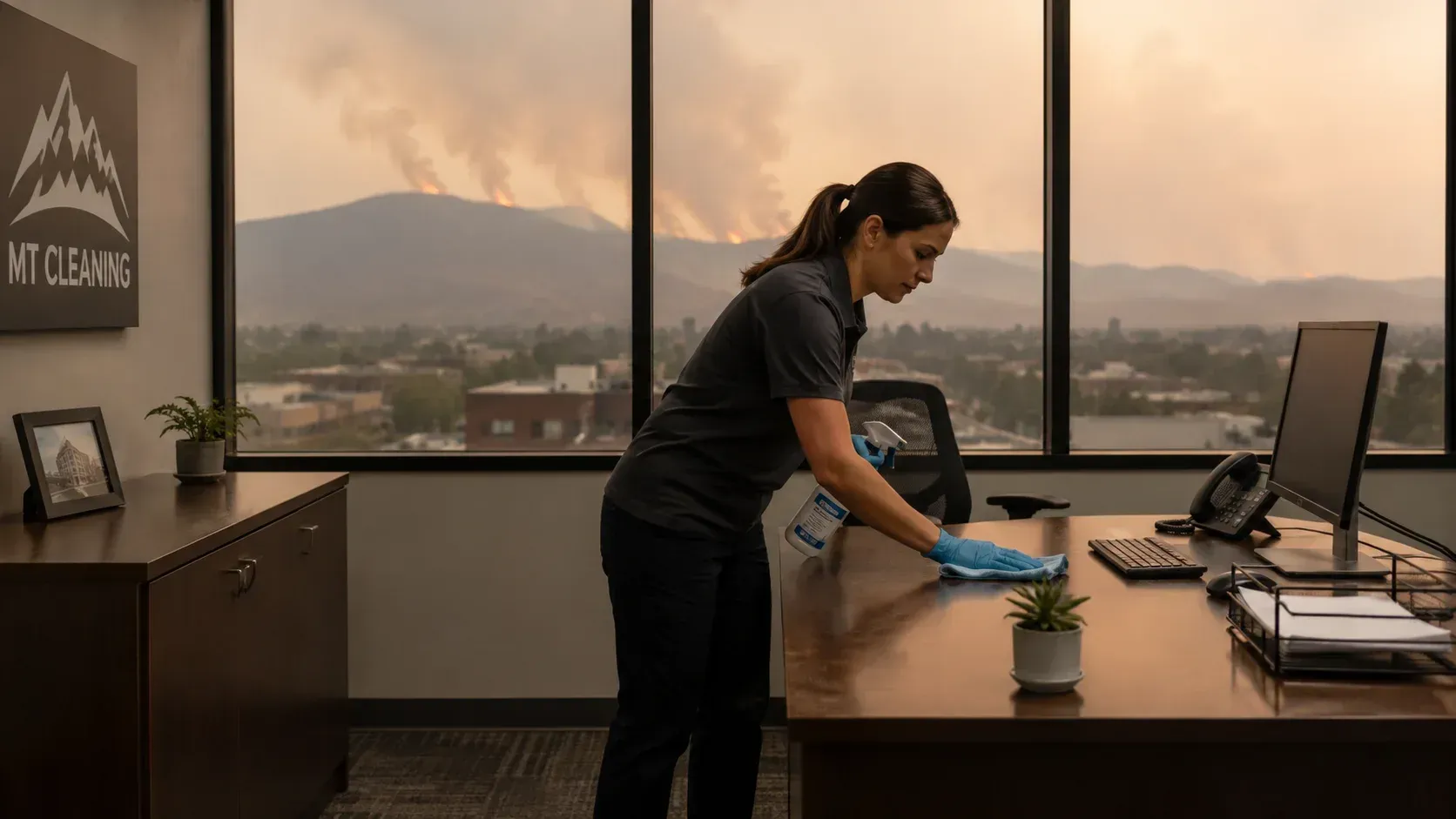
Table of Contents
- How Wildfire Smoke Gets Inside Billings Offices
- What Smoke Actually Leaves Behind
- Why Indoor Air Quality Matters More During Smoke Season
- How Professional Office Cleaning Addresses Smoke Residue
- What Routine Janitorial Work May Miss
- When to Schedule Office Cleaning After Wildfire Smoke
- Conclusion
- Still Smelling Smoke in Your Office?
- Frequently Asked Questions
Key Takeaways
- Wildfire smoke carries fine particles that enter Billings offices through doors, windows, and ventilation systems, then settle on surfaces where daily cleaning rarely reaches.
- Smoke residue does not leave when the sky clears. Ash, soot, and odor can stay in carpets, upholstery, and vents for weeks after a smoke event.
- Poor indoor air quality during smoke season has been linked to headaches, eye irritation, and respiratory discomfort, which matters in any shared workspace.
- Professional office cleaning uses HEPA filtration, deep carpet extraction, and detailed surface work that goes beyond a standard nightly janitorial routine.
- Timing matters. Cleaning during and shortly after heavy smoke days limits how deeply residue settles into porous materials.
Introduction
Wildfire smoke season increases the need for professional office cleaning in Billings because smoke does not stay outside. Fine particles, ash, and odor slip indoors through entrances and ventilation, settle on desks, carpets, and vents, and stay there long after the air outside clears.
Most summers, smoke from fires in western Montana, Idaho, and the Pacific Northwest drifts into the Yellowstone Valley. Some years it hangs over the city for weeks. During those stretches, offices keep operating. Employees come and go, doors open hundreds of times a day, and HVAC systems pull outside air in. The buildup is gradual, which is exactly why it gets overlooked.
This guide explains what smoke leaves behind in a workplace, why it affects the people working there, and what a commercial cleaning service actually does about it. It is written for business owners, office managers, and facility managers in the Billings area who want to make an informed decision rather than react after complaints start.
How Wildfire Smoke Gets Inside Billings Offices
Smoke particles are small. The ones that cause the most concern, called PM2.5, measure 2.5 microns or less. For comparison, a human hair is about 30 times wider. Particles that small pass through gaps around doors and windows without any trouble.
Ventilation is the bigger entry point. Most commercial HVAC systems draw in a percentage of outside air by design. Unless the building runs high-grade filters and they were replaced recently, a share of that smoke moves straight into the workspace.
Foot traffic adds to it. Every time someone walks in from a smoky parking lot, they carry particles on clothing, hair, and shoes. In an office with 20 or 30 employees plus visitors, that adds up over a week.
Billings has a geographic disadvantage here. The city sits in a valley along the Yellowstone River, and temperature inversions can trap smoke close to the ground for days. When that happens, indoor air quality tends to decline along with outdoor conditions.
What Smoke Actually Leaves Behind
Once smoke is indoors, gravity and airflow do the rest. The residue falls into a few categories, and each behaves differently.
Fine Particulate on Surfaces
PM2.5 settles as a thin film on desks, monitors, shelving, window sills, and light fixtures. It is often too fine to see until you wipe a white cloth across a surface. Because it is so light, normal foot traffic and HVAC airflow stir it back into the air repeatedly.
Ash and Soot
Heavier ash collects near entrances, on window sills, and along baseboards. Soot is oily and clings to surfaces, which is why wiping it with a dry cloth often smears it instead of removing it. Both can stain paint, fabric, and carpet if left in place.
Odor in Porous Materials
Smoke odor comes from volatile organic compounds that absorb into carpet fibers, upholstered chairs, fabric cubicle panels, and ceiling tiles. This is why an office can smell smoky on a clear day two weeks after the last bad air alert. Surface wiping does not reach it.
Residue in Vents and Returns
Air handling systems circulate whatever the building air contains. Smoke particles accumulate on vent covers, return grilles, and filter housings. Every time the system cycles, some of that material can re-enter occupied space.
Why Indoor Air Quality Matters More During Smoke Season
People spend most of their workday indoors, so the office becomes the main exposure point during a smoke event. The EPA and Montana DPHHS both note that fine particulate exposure is associated with eye irritation, headaches, coughing, and worsened symptoms for people with asthma or other respiratory conditions.
In a workplace, that shows up in ordinary ways. Employees mention scratchy throats. Someone with allergies has a rough week. People step outside less, so the building air gets more use, not less.
There is also a comfort and perception issue. Clients and customers notice a smoky smell in a lobby even when staff have stopped noticing it. Odor adapts quickly for the people inside a space and not at all for the people walking into it.
None of this means an office becomes unsafe the moment smoke arrives. It means the margin gets thinner, and the case for removing what has settled indoors gets stronger the longer smoke season runs.
How Professional Office Cleaning Addresses Smoke Residue
Wildfire smoke office cleaning is a different job than routine tidying. The goal is removal, not redistribution, and that changes the methods.
HEPA Vacuuming Instead of Standard Vacuuming
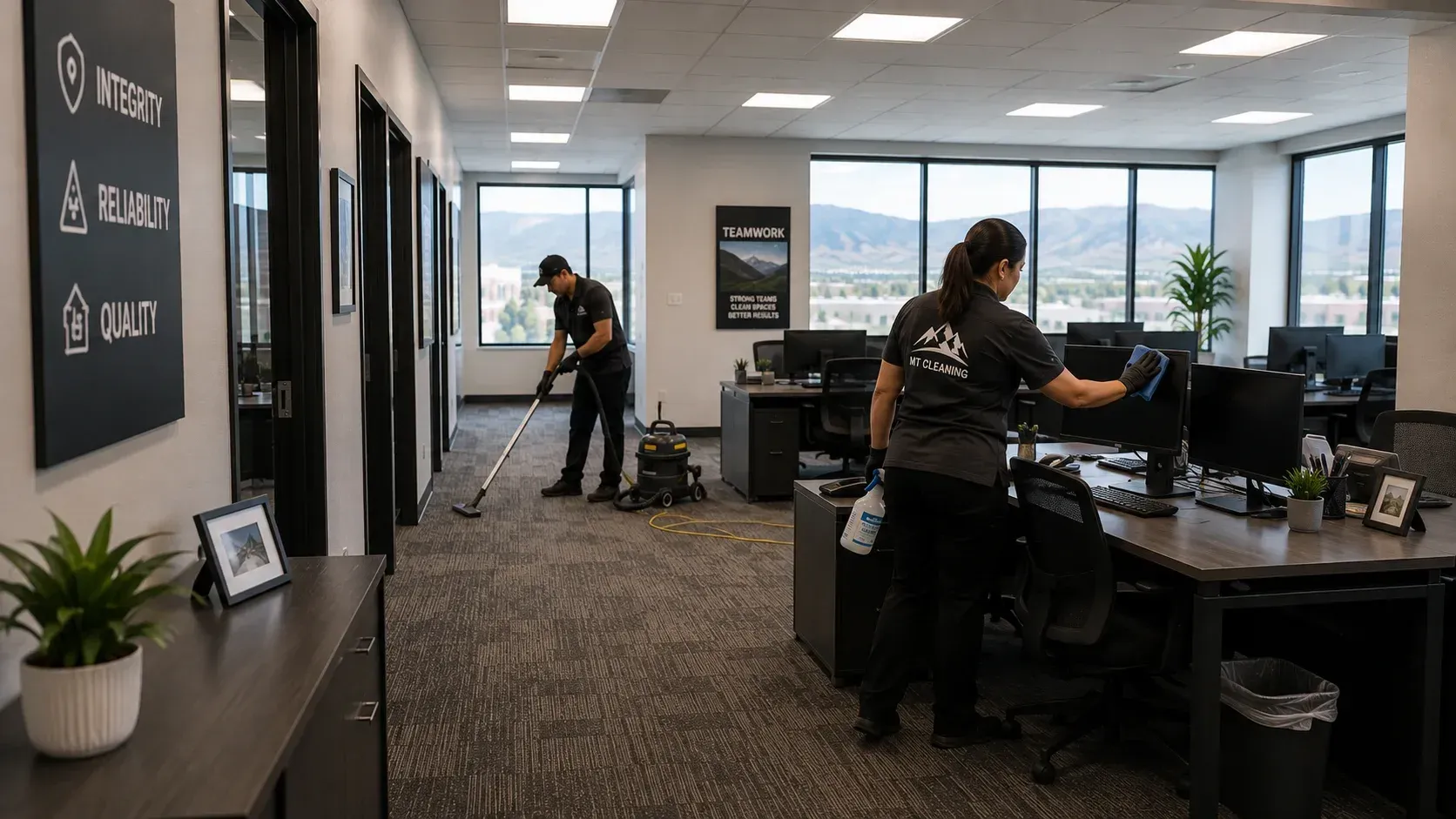
Standard vacuums can exhaust fine particles back into the room. HEPA-rated vacuums capture particles down to 0.3 microns, which covers the PM2.5 range that smoke produces. Professional crews use them on carpets, upholstery, vents, and hard-to-reach ledges where ash collects.
Damp Wiping of Hard Surfaces
Dry dusting moves smoke film around. Damp wiping with appropriate cleaners lifts it off desks, sills, baseboards, door frames, and fixtures. Detail work matters here because smoke settles on tops of cabinets and light lenses that nightly cleaning routines usually skip.
Carpet and Upholstery Extraction
Hot water extraction pulls embedded particles and odor compounds out of carpet fibers rather than sealing them in. Upholstered chairs and fabric panels get similar treatment. This is the step that addresses lingering smell rather than masking it with fragrance.
Vents, Returns, and High Surfaces
Cleaning vent covers and return grilles reduces the residue that recirculates each time the HVAC system runs. It does not replace duct cleaning or filter changes, which are separate services, but it removes the accessible buildup.
Glass and Entry Areas
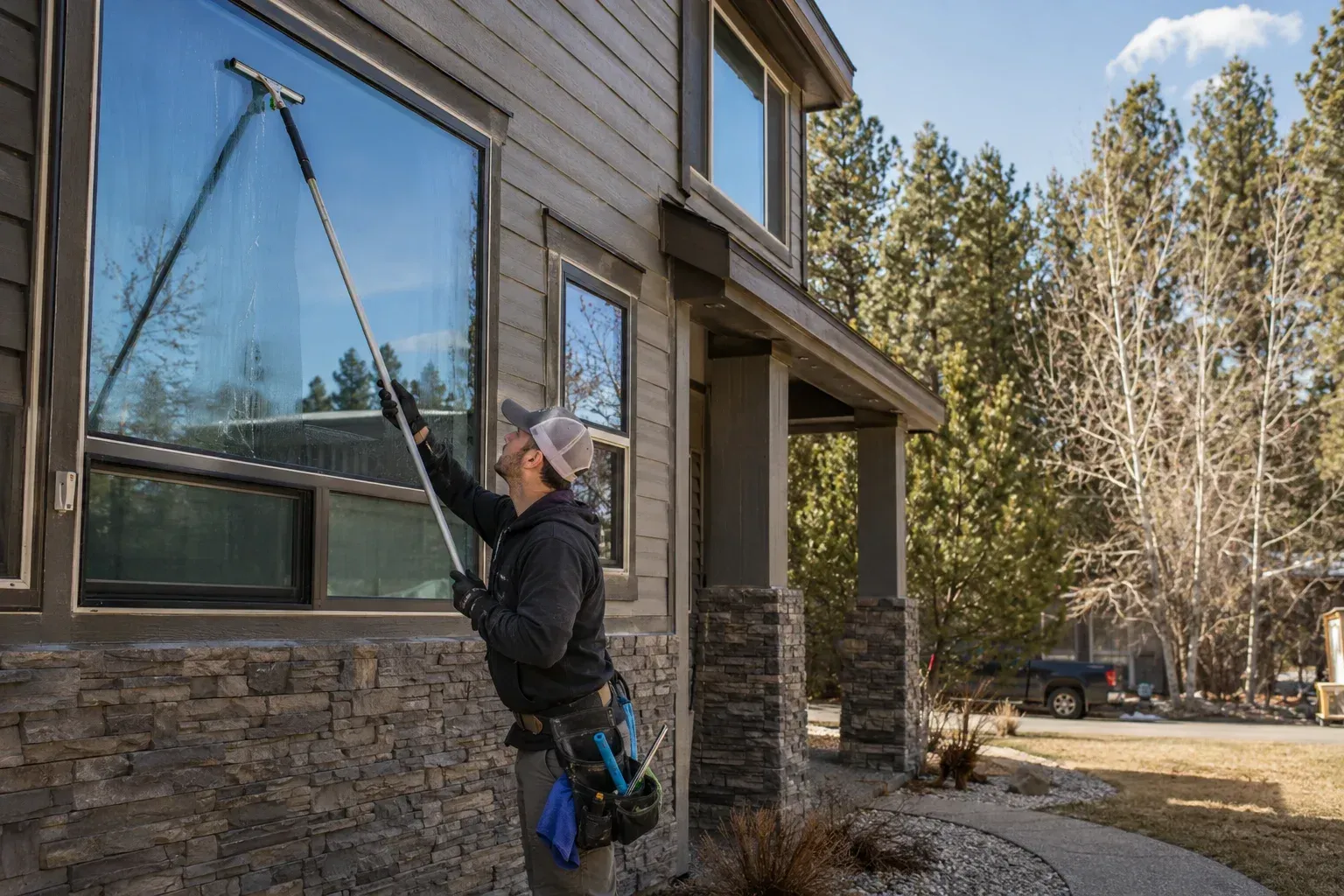
Smoke film on glass is easy to miss and easy to see once you look for it. Exterior and interior window cleaning restores light and removes one of the more visible traces of a long smoke stretch, especially on storefronts and lobby glass.
What Routine Janitorial Work May Miss
This is worth stating plainly, because it explains the gap. A standard nightly service usually covers trash, restrooms, floors, and visible surfaces. That work is necessary, and it is not designed for smoke residue.
Smoke settles on vertical surfaces, fabric, and elevated spots that routine checklists do not include. It embeds in carpet below the depth a quick vacuum pass reaches. And odor removal requires extraction, which is not part of any nightly routine.
There are also limits to what cleaning alone can do. If outdoor air quality is still poor, particles keep entering. Cleaning during smoke season is maintenance against an ongoing source, not a one-time fix. Building filtration, door discipline, and HVAC settings all play a part, and a cleaning provider should be upfront about that.
When to Schedule Office Cleaning After Wildfire Smoke
Timing is a judgment call, but a few patterns are worth knowing.
Office cleaning after wildfire smoke works best in two windows. The first is during an extended smoke event, when interim cleaning keeps settled particles from being tracked and stirred continuously. The second is right after air quality improves, before residue bonds further with fabrics and finishes.
Waiting until the end of the season means every smoke event that summer has layered onto the last one. Soot in particular becomes harder to remove from paint and fabric the longer it sits.
For offices in Billings, Laurel, Lockwood, and nearby communities, smoke season typically runs from July into September, though it varies year to year. Checking whether a provider covers your specific service area early in the summer is easier than searching for availability in the middle of an air quality alert, when demand rises.
Conclusion
Wildfire smoke season changes what clean means inside a Billings office. Particles small enough to pass through door gaps settle on every surface, work into carpet and fabric, and hold odor long after the sky clears. Routine janitorial service was never designed to remove that residue, and the geography of the Yellowstone Valley means smoke events here can last weeks rather than days.
Professional office cleaning addresses the problem at the removal level: HEPA vacuuming, damp surface wiping, carpet and upholstery extraction, and attention to vents and glass. It has real limits too. It cannot stop new smoke from entering, and it works best alongside good filtration and building practices.
The practical takeaway is to understand what has settled in your building, know which cleaning methods actually remove it, and plan timing around the smoke season rather than after it. Those three things put the decision on solid footing.
Still Smelling Smoke in Your Office Weeks After the Skies Cleared?
That lingering smell usually means residue is still sitting in carpet, fabric, or vents. If you are unsure what your building needs, a short conversation can clarify it.
Contact us with questions about your space, your building's smoke exposure, or what a cleaning plan for smoke season looks like. No pressure and no obligation, just straight answers so you can decide what makes sense for your workplace.
Frequently Asked Questions
How long does wildfire smoke residue stay in an office?
Without deep cleaning, residue can remain indefinitely. Fine particles settle into carpet, upholstery, and vents, and odor compounds bond with porous materials. The smell often lasts weeks after outdoor air clears, and soot can stain surfaces the longer it sits.
Is it worth cleaning while smoke is still in the air?
It can be, especially during long smoke events. Interim cleaning removes what has already settled and reduces the particles that foot traffic and HVAC airflow keep stirring up. A follow-up cleaning after air quality improves addresses what entered afterward.
Does regular janitorial service handle smoke residue?
Usually not. Nightly service covers trash, restrooms, and visible surfaces. Smoke residue collects on high surfaces, vertical surfaces, fabric, and inside carpet fibers, which requires HEPA vacuuming, damp wiping, and extraction methods outside a standard routine.
Can cleaning remove the smoke smell completely?
Extraction cleaning removes odor compounds from carpet and fabric, which addresses the source rather than covering it. Results depend on how long residue sat, the materials involved, and whether smoke reached areas like ductwork that require separate services.
How often should a Billings office be cleaned during smoke season?
It depends on smoke severity, building tightness, and foot traffic. Some offices add a deep cleaning after each major smoke event, while others schedule one mid-season and one at the end. A walkthrough of the specific space is the most reliable way to set a schedule.
This is paragraph text. Click it or hit the Manage Text button to change the font, color, size, format, and more. To set up site-wide paragraph and title styles, go to Site Theme.
Related Posts