How Often Should Homes in Lockwood, MT Have Their Windows Professionally Cleaned?
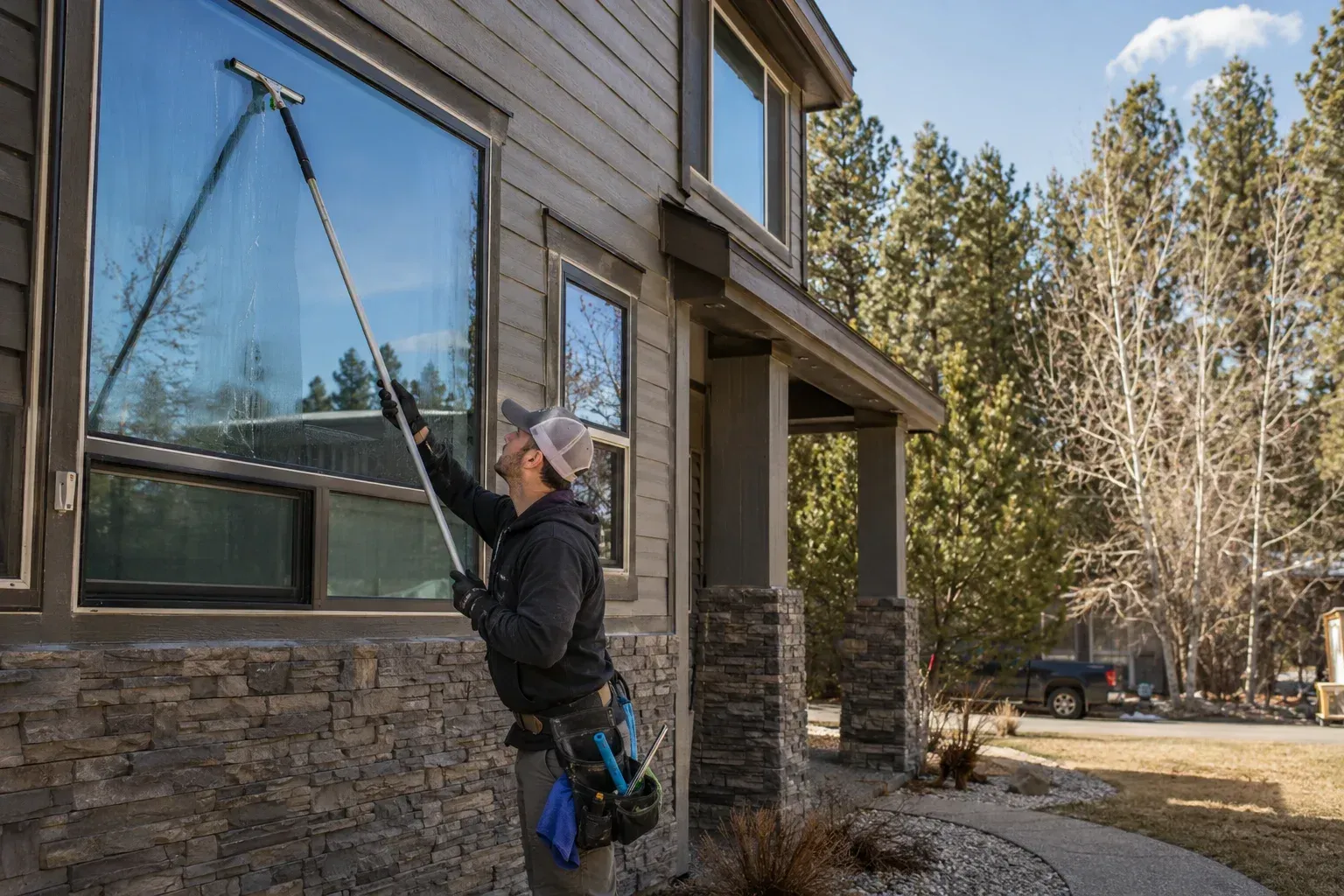
Table of Contents
- Introduction
- How window cleaning is actually priced
- Why a window and a pane are not the same thing
- What is included, and what is usually extra
- Height, access, and grids
- First cleans cost more than maintenance cleans
- Hard water spots are a different service
- Glass after construction or remodeling
- Why a small job costs more per window
- What Montana weather does to your schedule
- What we need in order to quote you
- Conclusion
- Request a Free Window Cleaning Estimate in Lockwood, MT
- Frequently Asked Questions
Key Takeaways
- Professional window cleaning in Lockwood is usually priced per window or per pane, with a minimum service charge, and not by the square footage of your house.
- The single biggest reason two quotes look nothing alike is the counting method. One company's "window" can be another company's three panes, so ask how they count before comparing prices.
- Screens, tracks, sills, and storm windows are commonly priced separately. A quote for glass only and a quote for a full detail are different services.
- Your first cleaning generally costs more than the ones after it, because a first visit is catch-up work rather than maintenance.
- Hard water and sprinkler spotting is mineral etching, not dirt. It needs a separate restoration process, it is priced separately, and it is not always fully reversible.
Introduction
Professional window cleaning in Lockwood is priced per window or per pane in most cases, with a minimum charge for small jobs, and the total is driven by four things: how many openings you have, how many stories, whether screens and tracks are included, and whether this is a first cleaning or a maintenance cleaning. Square footage of the house barely matters. A modest home with twenty divided-lite windows takes longer than a larger home with eight big sliders, and it prices accordingly.
That is also why the quotes you collect can look wildly inconsistent. Most of the time they are not pricing the same work. When we quote professional window cleaning, the first thing we settle is what counts as a window, because that one definition moves the number more than anything else on the list.
Here is how the pricing actually works, and what to ask so you can compare two estimates properly.
How Window Cleaning Is Actually Priced
There are three pricing models in this trade, and it helps to know which one you are being quoted.
Per window or per pane is the most common for residential work. Each opening, or each individual piece of glass, carries a price, and the total is the count times that rate. It is the most transparent model, because you can check the count yourself.
Hourly shows up more often on commercial work and on unusual buildings where the count is hard to establish. It is fair, but it puts the schedule risk on you unless there is a cap.
Flat rate for the whole house is offered by some companies after a walkthrough or a photo review. It is the easiest to budget against, and its accuracy depends on whether the person quoting actually looked at what they were quoting.
Layered on top of all three is a minimum service charge, because getting a crew, ladders, poles, and water to your address costs the same whether there are six windows or sixty.
Why a Window and a Pane Are Not the Same Thing
This is the part worth understanding before you call anyone, because it explains most of the confusion in window cleaning pricing.
Take a standard double-hung window. From outside your house it looks like one window. To someone cleaning it, that is an upper sash and a lower sash, which is two pieces of glass on the outside and two more on the inside, plus a screen and a track. So one opening can be four surfaces or more.
Now take a fixed picture window. One large pane, two sides, no screen, no sash to work around. It is bigger and it is faster.
So when a company quotes you a price per window, the question that matters is what they are calling a window. A per-opening price and a per-pane price can differ by a factor of two or three on the same house, and both can be honest. What is not useful is comparing one against the other without asking.
The practical script: ask each company how many windows they counted on your home and how they arrived at that number. If the counts differ, you have found your answer for why the prices differ.
What Is Included, and What Is Usually Extra
A glass-only cleaning and a full window detail are different jobs.
Glass cleaning is the glass itself, inside and out. That is the core service and it is what most per-window prices refer to.
Beyond that, these items are commonly priced separately, and they should each appear on your estimate one way or the other:
- Screens. Removing, cleaning, and reinstalling screens takes real time, and dirty screens will re-soil clean glass the first time it rains.
- Tracks and sills. The channel a window slides in collects grit, dead insects, and in this part of Montana a surprising amount of fine dust. Detailing tracks is hand work.
- Storm windows. These add a full extra layer of glass per opening plus the labor of removing and refitting them.
- Exterior only. Cheaper than both sides, and worth considering if your interiors are already clean. Interior work also means moving furniture and protecting floors.
None of these are upsells invented at the door. They are separate scopes, and the reason to settle them early is that a low quote and a high quote are frequently the same crew doing different amounts of work.
Height, Access, and Grids
Three site factors move a window cleaning quote more than most homeowners expect.
Stories. Ground floor glass is quick. Second-story exteriors mean ladder work or a water-fed pole system, both of which take longer per window and require more setup. If a window is above a deck, a steep roof pitch, a bay, or a landscaping bed we should not be standing in, that specific window costs more than its neighbors.
Access. Fences, air conditioning units, mature shrubs planted tight against the house, and steep grade all slow the exterior down. Inside, a window behind a built-in or a large piece of furniture is the same problem.
Grids and divided lites. This one catches people out. A window with true divided panes, meaning individual small pieces of glass in real muntins, can take several times as long as a single sheet of the same size, because every small pane is cleaned and detailed individually. Snap-in grids between the glass are quick, since the grid is not actually in the way. Knowing which kind you have changes your quote materially, and if you are not sure, a photo settles it.
First Cleans Cost More Than Maintenance Cleans
If your windows have not been done in several years, the first visit is not really a cleaning. It is a reset.
Old glass carries built-up film, overspray, bug residue, mineral spotting, paint flecks, and grit in the tracks, and getting to actual clean takes longer than keeping it there. So most companies, us included, price a first visit higher than the recurring visits that follow, and that is not a bait and switch as long as it is stated up front.
The flip side is the part worth planning around. Once glass is properly clean, maintaining it is cheaper per visit, and a recurring schedule usually carries a better rate than one-off calls. If you are weighing whether to get on a schedule, the honest math is that two maintenance visits a year often cost less combined than one heavy first clean every three years, and your windows look better the whole time.
Hard Water Spots Are a Different Service
This is the most important distinction on this page, because it is where expectations get set wrong.
When a lawn sprinkler hits a window, or when hard water runs down glass and dries there, it leaves mineral deposits behind. Left long enough, those minerals bond to and begin etching the glass surface. That is no longer soil sitting on top of the window, which is what cleaning removes. It is a change to the glass itself.
Removing it is a restoration process using different products and abrasives, done pane by pane, and it is priced separately for good reason. Two things we tell every customer: it takes considerably longer than cleaning, and depending on how deep the etching goes, it is not always possible to return the glass fully to clear.
So if you have windows on a sprinkler line with white cloudy patches that will not wipe off, mention it when you ask for a quote. Any estimate promising to make heavy etching disappear at a standard cleaning price is promising something the process does not reliably deliver. Adjusting the sprinkler heads is the cheapest fix there is, and it is worth doing before you pay for restoration.
Glass After Construction or Remodeling
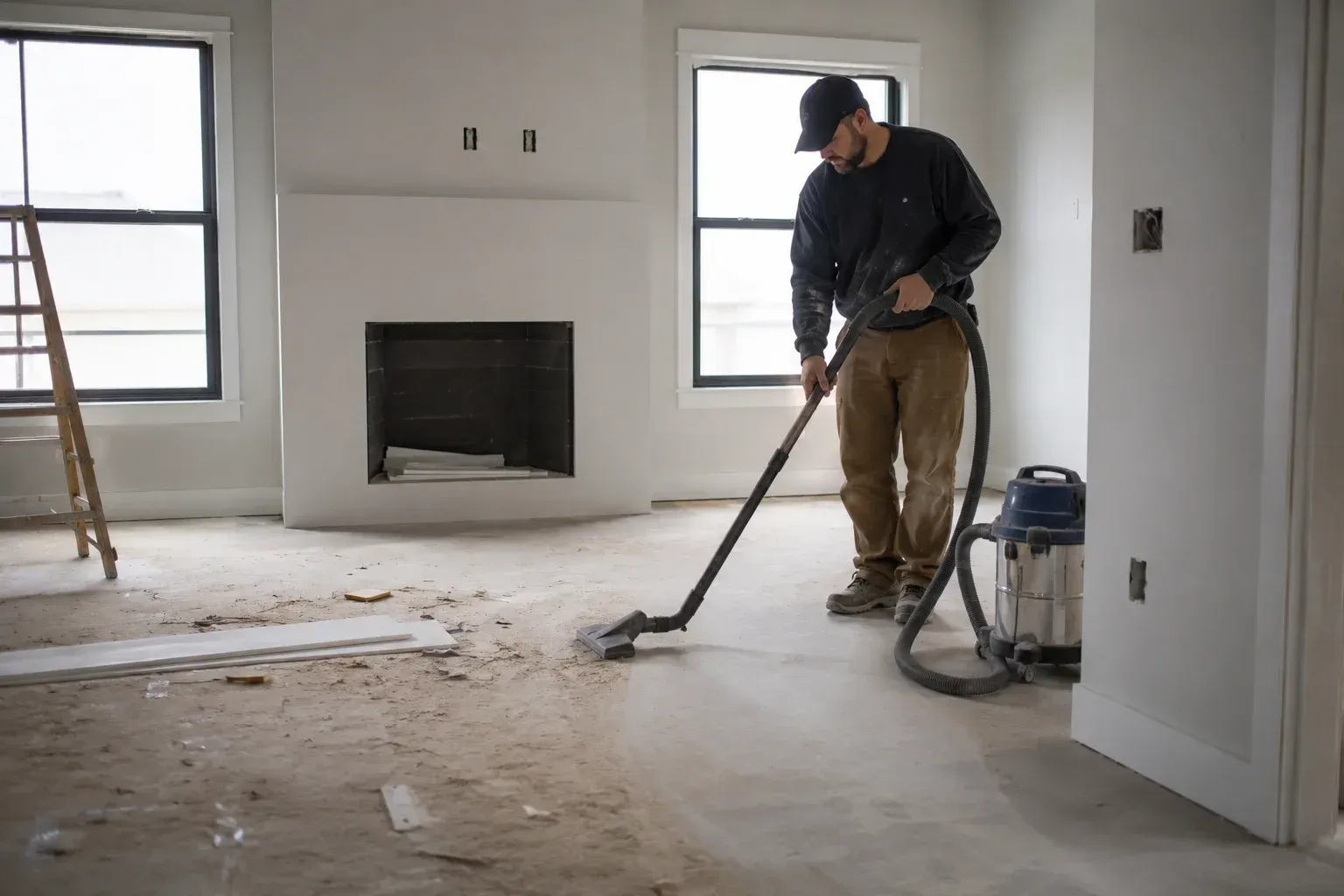
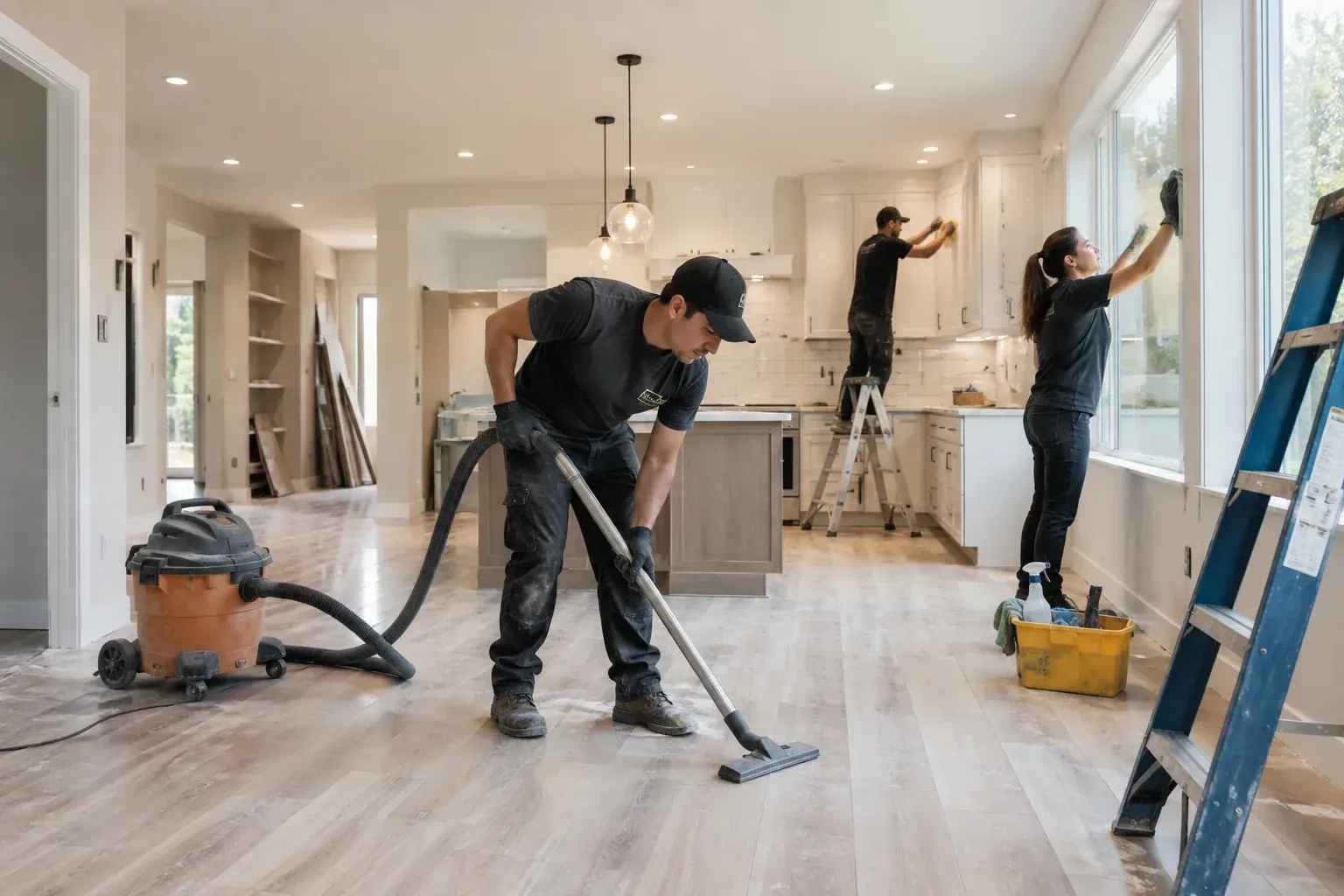
New and remodeled glass is its own category. Construction leaves behind paint, drywall mud, stucco splatter, silicone, adhesive labels, and sometimes metal oxide fallout, and getting that off requires scraping and solvents rather than washing.
It is slower, it carries more risk to the glass, and it is priced as construction glass cleaning rather than at a maintenance rate. If your windows are new or a remodel just finished, that work usually belongs inside a broader post-construction cleaning scope rather than being booked as a standalone window appointment, because the rest of the site is generally in the same condition as the glass.
One practical note if you are mid-project: labels and stickers come off far more easily before they have baked in the sun for a season.
Why a Small Job Costs More Per Window
A six-window job and a forty-window job do not cost proportionally, and the reason is mobilization. Loading equipment, driving to your address, setting up, protecting interior floors, and packing out again takes roughly the same time either way. Spread across forty windows that overhead disappears into the rate. Spread across six, it does not, which is why a minimum charge exists.
The useful consequence is about bundling. If you also want a house cleaning, doing both in one visit costs less than two separate mobilizations, and the same applies if a neighbor wants theirs done the same day.
What Montana Weather Does to Your Schedule
Timing is a real factor here, more than in milder climates.
Exterior window cleaning has a season. Cleaning glass in a hard freeze is not practical, so exterior work concentrates in the shoulder seasons and summer while winter is mostly interior work, which compresses demand and means the good spring slots book up.
The local soiling pattern is specific too. Dry, windy conditions carry fine dust and agricultural grit onto glass all season, which is why the dusty summer months change window cleaning frequency here. Wildfire smoke deposits a film that shows badly in low sun, spring brings pollen, and winter brings road grime on anything facing a street.
For most Lockwood homes, that pattern points toward twice a year, timed after pollen in spring and after the dust and smoke settle in fall. Businesses on a main road generally need more than that, and dirty glass reads differently on a storefront than on a house, which is a point worth reading about separately ifdirty windows are affecting your business image.
What We Need in Order to Quote You
You do not need to count panes. These five things get you a real number rather than a range:
- Roughly how many window openings, and how many stories
- Whether you want interior and exterior, or exterior only
- Whether you want screens and tracks included
- Whether the windows have true divided panes or grids between the glass
- Roughly when they were last professionally cleaned, and whether any have white spotting that will not wipe off
Photos are better than descriptions. Two or three shots of each side of the house tell us the count, the height, the grid situation, and the condition all at once, and that is the whole quote.
Conclusion
Window cleaning cost in Lockwood comes down to the count, the height, what is included beyond the glass, and the condition of the windows when we arrive. Square footage is close to irrelevant, and the pricing confusion almost always traces back to two companies counting windows differently or including different work.
Before you compare quotes, ask each company how many windows they counted, whether screens and tracks are in or out, whether a first-clean rate applies, and how they handle hard water spotting. Once those four answers line up, the prices become comparable, and usually a lot closer together than they first appeared. You can see what our customers say about the results on our testimonials page.
Request a Free Window Cleaning Estimate in Lockwood, MT
Send us a few photos and we will give you a real number rather than a range, including exactly what is and is not in it. We clean windows for homes and businesses in Billings, Lockwood, Laurel, and Park City, and you can confirm the full
service area if you are outside town. If you are not satisfied with the results, we will make it right. Call (406) 812-0327 Monday through Friday, 8am to 6pm, or
get in touch for an estimate and tell us whether you want screens and tracks included.
Frequently Asked Questions
How is window cleaning priced, per window or per hour?
Most residential window cleaning is priced per window or per pane with a minimum service charge. Hourly pricing is more common on commercial and unusual buildings. Ask which model you are being quoted, and how the company counts a window, before comparing estimates.
Are screens and tracks included in window cleaning?
Usually not in a basic glass price. Screen cleaning and track detailing are hand work and are commonly quoted as separate line items. Ask for them to be listed either way, since this is a frequent reason two quotes differ on the same house.
Why is my first window cleaning more expensive?
A first visit on glass that has not been cleaned in years is catch-up work, not maintenance. Built-up film, bug residue, and grit in the tracks take longer to remove than to keep clean. Recurring visits after that are typically priced lower.
Can hard water stains be removed from windows?
Sometimes, but not always. Mineral deposits can etch into the glass surface, and removing them is a separate restoration process priced apart from cleaning. Long-standing etching may not come fully clear, so adjusting sprinkler heads to stop the cause matters most.
How often should windows be cleaned in Lockwood?
Twice a year suits most Lockwood homes, timed after spring pollen and after summer dust and smoke settle in fall. Storefronts and offices on busy roads generally need more frequent cleaning, since glass condition affects how the business is perceived.
Related Posts